Showing posts with label Curriculum. Show all posts

Saturday, April 12, 2025

2 - Hypothesising and Reflecting

 Looking at the two main areas of concern - maths and writing, I feel the area I should focus on this year is writing. Maths has a whole new set of pedagogy with Numicon coming into our school that we've been advised to "trust the process" with and that would be better to reflect on once we really get going.

The new curriculum for writing has been released and boy, is it a busy one! It covers:

  • Speech and language using any method of communication a student uses (including AAC)
  • Phonemic awareness
  • Systematic synthetic phonics (decoding and spelling skills)
  • Handwriting
  • Vocabulary
  • Morphology
  • Syntax
  • Fluency
  • Text structure

Each of these areas a huge all by themselves. 

So why are the tamariki not doing so well in writing? Their reading is ok, but the ability to put things down on paper or on their devices is letting them down overall. Writing is the other side of the reading 'coin' and being able to express yourself clearly is one of the most exciting things people do in this world. 

The tamariki in my class were 5 and 6 years old when Covid hit. There was disruption in schooling with lock downs and failure for whatever reason to engage in learning at home. This also affected their social skills. Since then there has been a societal change in attitude to school attendance, and more kids staying home longer when they are ill. Did this affect their ongoing schooling? 

I also have a cohort of tamariki that have intellectual disabilities which seems to affect writing the most. They have an inability to write clearly (motor skills) and short working memories. They also tend to get distracted by things; one for example, won't write a word down until they know they have spelled it correctly so barely gets anything written down. All of these tamariki require constant supervision and help to write. 

One child is at the very start of his journey potentially using AAC. This is something separate I am learning about.

My question is:  

How can I strengthen writing outcomes for all learners by adapting my programme to meet a wide range of needs and align with the refreshed Literacy framework?

I need to make sure I am differentiating appropriately, that I know the new curriculum and plan accordingly. When I look at the students individually, there are a few things that have not been taught explicitly by myself or previous teachers on a regular or ongoing basis - we haven't needed to. What I have been covering daily is vocabulary, morphology, handwriting and text structures as we cover them. 

What do I need to do to differentiate well, cover the curriculum, and to daily complete more explicit teaching on syntax and text structure? 

When I reflect on writing, I have to be honest and say, it is not my favourite thing to teach. I have always found it easy and so struggle sometimes as to why the kids just can't do it well! I have focused previously on maths and reading, but writing has always taken somewhat of a back seat in comparison to my own education about the matter. I do PLD on it, then struggle to implement. This new curriculum has definitely given me the impetus to do better. How? That is the question. The curriculum is NOT that explicit!!!!



Friday, September 17, 2021

DFI Reflection - Day 8 - Computational Thinking

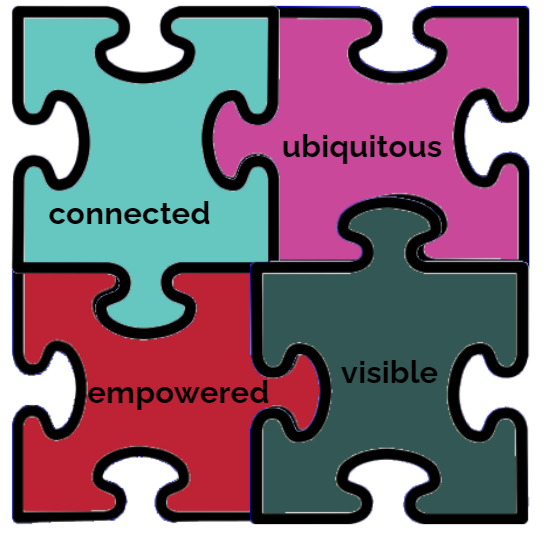
Empowerment was the kaupapa for today's session. It is around making sure that our tamariki, who come from places of almost total disempowerment take back some of the control and have choices in life. From what they are learning, what they create as a result and taking in knowledge that gives them the ultimate power over their lives.

Waitara is a community that has a lot of poverty. We are a decile 2 school. Our tamariki often live with caregivers (usually their Nan) and sometimes move as the shortage of housing in our town gets worse. It is a community that has problems with alcohol and drugs such as P. The school for some of our tamariki is the safest place they have in their lives, and we as their teachers are their rocks in a stormy sea. To enable them to reclaim their Rangatiratanga is a game changer for these kids. To be a part of educating them, of empowering them, of expecting more from them, and making them believe in themselves, is certainly a privilege for me.

So how does Manaiakalani help to restore our communities? How does the emphasis on the digital world help? It allows more shared learning to occur with students enabled to join or create communities of learners that extend outside the classroom. It assists in creating supportive learning environments by offering resources that take account of individual, cultural or developmental differences. It helps by offering students virtual experiences and tools that save them time, allowing learning to be taken further. Often lower decile areas do not have the same access to digital technology that more affluent areas have. Manaiakalani breaks down the barriers to this access and lets our tamariki get as much if not more future facing learning.

Our school took the path of buying the devices for the students, so the school owns them. It doesn't really fit with the kaupapa of Manaiakalani and that is unfortunate. We didn't sell the "buy your own device through micro-financing" well at all. We haven't set up a trust to handle this. We are a step behind in this area, but we need to get onto it for our younger students so they can come through with that power of ownership lifting them.

This part of the kaupapa completes the puzzle. 

We dipped our toes into the future too. What should we expect from it? What jobs? What skills? I see a lot of commentary about future proofing our tamariki, but sometimes I think, hmmm, look at all the clips from old TV programmes now available which were predicting our future and how much of it didn't come to fruition. Things we use today were created by school systems that didn't turn out future thinking adults, yet they happened. I believe it just part of human nature, that we will always have creative people that will come to the fore, regardless of their schooling. But our tamariki may never be in a position to get to the front of the pack and we have a huge hand in empowering them to take the steps they need to get there, using the technology we CAN help them with today. It allows them equity in the system to enable them to take the next steps into the future.

Our create sessions were based on computational thinking and the new requirements in the curriculum. We looked at various online and offline learning opportunities and the delivery of ideas. I have attended a PLD on the new curriculum at a local high school and we learned to use Scratch and completed some offline activities. It was an excellent few sessions and really gave me confidence in this area. So when it came time to choose an activity type for our create session I decided on one that focused on binary numbers and using them to create outcomes. I never really understood how binary worked although knew it was fundamental in computers and the digital world around us. A few pennies dropped during the session and we discussed offline activities we could use in the classroom around binary options. 

Our create option was to make ourselves a name badge with our name in binary. Here's mine! It was a fun activity to do and one I can see myself doing the classroom. I have some students who would find it fascinating and fun. 


It was our last week "in class" so to speak, and I really wish the course could continue! It has been fantastic and I really feel that I have grown so much in confidence within myself. I'm a social media user across multiple platforms and now when I see a teacher sharing a digital idea, I'm all in - boots and all - to give it a go if I think it fits in with my pedagogical ideas. It has made a huge difference to the delivery of work to my tamariki and the sharing of ideas among Manaiakalani teachers is immensely helpful, time saving and promotes collegiality which is often sorely missing in the sector. 

If you ever get the opportunity to do this intensive, go for it. You'll never look back!