Showing posts with label DFI. Show all posts

Friday, September 24, 2021

DFI Reflection - Day 9 - External Recognition

Our final session on DFI. I am going to miss it. I have learned so much over this past term and become so much more confident in my online teaching abilities.

We sat our exam for Google Educator Level 1 and I am pleased to say I passed! I am now looking to do my Level 2 exam. There are other professional certificates I would like to earn as well so will spend the upcoming school holidays working on these to continue to upskill myself.

I also added several Google extensions and started using them. I am loving Toby mini. I have all the pages I open every day at the start of the day set up - I now no longer forget to do the bus kids each day as the Google Form is up and running next to the roll. It saves me from forgetting to open things when I start teaching. Saves time and stress for sure.  I'm also using the Colour Pick Eye Dropper to keep themes within work I am assigning. So if we do a School Journey story, all the slides that come out of that for work match the colours of the illustrations. I don't know if the kids notice, but I feel more professional and set when it is coordinated!! 

There are still many things I want to dive into more as and when there is a need, or the time! Knowing there is so much more to do is pretty exciting and I'll be able to keep the kids engaged and active online with new things regularly. I now know where to go to find even newer things too. One tool I thought I would never admit to using but find amazing things for the kids is:  TikTok. Or #TeacherTok.  There are educators on the platform from all over the world that share tidbits of information, mostly digital, that help save time, engage learners and help teachers. It is where I learned about Eduprotocols which I constantly use in class as they have kids collaborating online and my kids LOVE them. I am going to blog about these resources in a separate post as just too much to go on about on this one.

Overall, the Digital Fluency Intensive course has opened up a world of skills I am glad I have now. A big thanks to Vicki and her team of facilitators which have shared their knowledge and steered us on our journey. A personal thank you to Jeremy Ferguson our Bubble Coach for his patience and humour in supporting our group with its learning. 


Friday, September 17, 2021

DFI Reflection - Day 8 - Computational Thinking

Empowerment was the kaupapa for today's session. It is around making sure that our tamariki, who come from places of almost total disempowerment take back some of the control and have choices in life. From what they are learning, what they create as a result and taking in knowledge that gives them the ultimate power over their lives.

Waitara is a community that has a lot of poverty. We are a decile 2 school. Our tamariki often live with caregivers (usually their Nan) and sometimes move as the shortage of housing in our town gets worse. It is a community that has problems with alcohol and drugs such as P. The school for some of our tamariki is the safest place they have in their lives, and we as their teachers are their rocks in a stormy sea. To enable them to reclaim their Rangatiratanga is a game changer for these kids. To be a part of educating them, of empowering them, of expecting more from them, and making them believe in themselves, is certainly a privilege for me.

So how does Manaiakalani help to restore our communities? How does the emphasis on the digital world help? It allows more shared learning to occur with students enabled to join or create communities of learners that extend outside the classroom. It assists in creating supportive learning environments by offering resources that take account of individual, cultural or developmental differences. It helps by offering students virtual experiences and tools that save them time, allowing learning to be taken further. Often lower decile areas do not have the same access to digital technology that more affluent areas have. Manaiakalani breaks down the barriers to this access and lets our tamariki get as much if not more future facing learning.

Our school took the path of buying the devices for the students, so the school owns them. It doesn't really fit with the kaupapa of Manaiakalani and that is unfortunate. We didn't sell the "buy your own device through micro-financing" well at all. We haven't set up a trust to handle this. We are a step behind in this area, but we need to get onto it for our younger students so they can come through with that power of ownership lifting them.

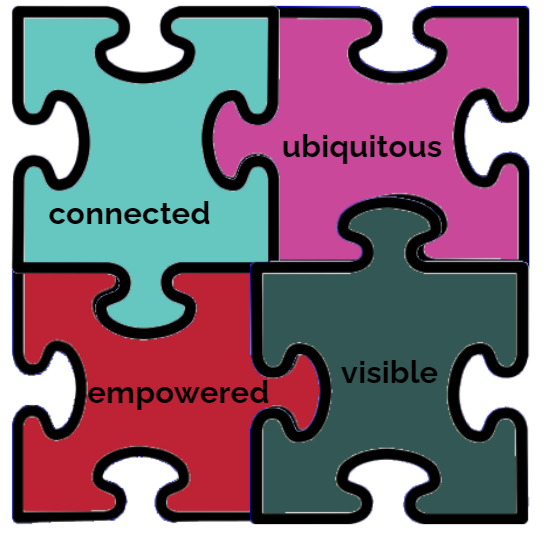
This part of the kaupapa completes the puzzle. 

We dipped our toes into the future too. What should we expect from it? What jobs? What skills? I see a lot of commentary about future proofing our tamariki, but sometimes I think, hmmm, look at all the clips from old TV programmes now available which were predicting our future and how much of it didn't come to fruition. Things we use today were created by school systems that didn't turn out future thinking adults, yet they happened. I believe it just part of human nature, that we will always have creative people that will come to the fore, regardless of their schooling. But our tamariki may never be in a position to get to the front of the pack and we have a huge hand in empowering them to take the steps they need to get there, using the technology we CAN help them with today. It allows them equity in the system to enable them to take the next steps into the future.

Our create sessions were based on computational thinking and the new requirements in the curriculum. We looked at various online and offline learning opportunities and the delivery of ideas. I have attended a PLD on the new curriculum at a local high school and we learned to use Scratch and completed some offline activities. It was an excellent few sessions and really gave me confidence in this area. So when it came time to choose an activity type for our create session I decided on one that focused on binary numbers and using them to create outcomes. I never really understood how binary worked although knew it was fundamental in computers and the digital world around us. A few pennies dropped during the session and we discussed offline activities we could use in the classroom around binary options. 

Our create option was to make ourselves a name badge with our name in binary. Here's mine! It was a fun activity to do and one I can see myself doing the classroom. I have some students who would find it fascinating and fun. 


It was our last week "in class" so to speak, and I really wish the course could continue! It has been fantastic and I really feel that I have grown so much in confidence within myself. I'm a social media user across multiple platforms and now when I see a teacher sharing a digital idea, I'm all in - boots and all - to give it a go if I think it fits in with my pedagogical ideas. It has made a huge difference to the delivery of work to my tamariki and the sharing of ideas among Manaiakalani teachers is immensely helpful, time saving and promotes collegiality which is often sorely missing in the sector. 

If you ever get the opportunity to do this intensive, go for it. You'll never look back!


Friday, September 10, 2021

DFI Reflection - Day 7 - Devices

Ubiquitousness - part of the kaupapa of Manaiakalani. Learning must be ubiquitous. Everywhere, available anytime, anywhere to anyone. By having our sites and workspaces available online, with rewindable learning, our tamariki can partake in learning whenever they like, from wherever they like. This includes over long breaks.  We were shown the increase in good outcomes the Summer Learning Journey offering made to those ākonga who participated. Learning over the summer break for 30 minutes a day with engaging programme meant they were coming back at a higher level than they were at the end of the year before, no drop! This is exciting.


When we had our first lockdown in 2020, we had devices one to one for our students, but they were second hand donated devices, or very old. Some were in a very precarious situation! We looked at giving out the devices for use, but we discovered that a majority of our whānau did not have access to good internet, or internet at all. We ended up going with paper packs and letting those that had their own devices access some very quickly cobbled together google sites. We had little training in sites. Our tamariki were absent for most of our time in lockdown. My biggest regret after going through the past year and participating in the DFI is that we didn't start sooner. Our second lockdown (which we came out of yesterday school wise) was a completely different scenario. Over the past year our whānau had gotten themselves better connections to the internet and we had started on our Manaiakalani journey.

When we hit our second lockdown, by then our school had purchased enough Chromebooks for the seniors (three classrooms) and one of the middle school rooms. These were sent home to the tamariki for them to use for school. It made a huge difference to engagement. They were used to using our sites and the work we had online. It was gratifying to have so many at our Google Meets each day and to have interaction online with the students. It was completely different! It showed how far both the teachers and learners had come.  We still issued hard packs as we knew our kids enjoyed worksheets (!!) and sometimes they needed a break from their devices. They included some cutting out and gluing work and mindfulness colouring too. A real mix of activities to do.

On my site I included screencastifies of how to do a few things as some kids had forgotten - and I wasn't there 24/7 to help them. It helped those that were slower picking up changes I had made too. My class has a wide range of abilities, from reading at a 4-5 year old level, to reading as a 14 year old. It is essential that I offer work and learning opportunities for everyone and rewindable learning makes more opportunities available for my lower achieving learners. It allows my high achievers to continue ahead also. 

We have dedicated relievers for our rooms for pre-booked days, so we avoid too much disruption for our learners. They do not cope well with change in personnel so we do our best to reduce the number of relievers they have to ensure their well-being comes first. Our relievers are therefore well known to the tamariki and they have great relationships with them. They arrange all their own work for these days and dovetail the learning they plan and present into what we are doing. They use our sites and add their own content to them. It would be great if these long-term relievers could be trained in the Manaiakalani pedagogy also. We share as much as we can with them but that is not the same as attending a DFI.

We completed an exercise on iPads with Explain Everything (EE). Awesome app! Our school does not have the licences for the paid version though which is a pity.  

A teacher created activity I completed on EE:

And another activity with a recording. Click on the image to hear my thoughts on EE:


During the last part of the day I completed a Workspace in Hapara which I have looked at for two years now and didn't know how to use.  I am going to make the work I completed today available to my class next week with it linked on my site for them to use to access. Exciting! I like the ability to put completion dates on the work as sometimes I'm sure some in my class think the work I assign is optional. I will definitely be using this tool more. This lesson is based around use of our chromebooks. My class was unfortunate to have me not participate in the DFI until term 3, but they received their chromebooks in term 2. We have done some work on how to use them, but not to the degree the classrooms with teachers who have completed the DFI have done. It will be good to see their faces when they find out how much more than can do - in a far more easy manner!


Friday, September 3, 2021

DFI - Reflection - Day 6 - Enabling Access - Sites

Connection. A fundamental part of the Manaiakalani kaupapa. It feeds into our need to share with others about our lives, and our tamariki sharing their work. Our look at sites today brought together the individual skills we had gathered so far and looked at the overall purpose of having a site:

  • To be a one stop shop for learning
  • To have learning be able to be accessed from anywhere, anytime and at the pace the learner needs
  • To allow rewindable learning
  • To make our planning and teaching visible to everyone
  • Weekly plans, timetables and overviews are available
  • To allow personalised learning
  • and most pertinent to the past couple of weeks, it is available for learning from home during lockdowns


We studied various existing sites from around the country and analysed them for their visual appeal (for the learners), their usability and functionality.  We looked at engagement, navigation, creativity, effective teacher practice and organising the sites.

I created my first website early in 2020 ready for what we knew was coming, a lockdown. I knew nothing about sites and it was a big learning curve. My site was basic but helped deliver learning over the few weeks my tamariki were working from home, but a lot did not have devices or internet to access it. When we came back, we had made the decision to deliver classroom work online also and we stepped up our efforts and our sites. But it wasn't until our school embraced Manaiakalani and started DFI professional learning that we realised what more we could achieve.

I have now created sites for my Guiding roles as well as my classroom. I feel a lot more confident after the past two sessions of learning to do more complex things and how to use the tools in the Google Suite.  I had a goal of achieving three things today on my site: add my weekly timetable to the home page (tick!), add a notices section (tick!) and to use some photos of my tamariki to create buttons. I was annoyed to find that although I had a lot of photos, none of them were suitable! That will have to be rectified when we get back. I can't wait!  I did manage to tweak some other things and get onto next week's learning too.  Have a look and click on the image below:


But the connectivity is more than just sites. It is about connecting with colleagues, not reinventing the wheel, sharing ideas and pedagogy, making connections with our whānau and our tamariki. I've only worked at one school; this is only my fourth year of teaching. I have kept in touch with most of my study cohort and they have all commented on the competitiveness and lack of sharing in the profession. We all studied as mature students and were all over 40 when we started. We had mostly worked in the corporate world (this shared history may be why we were drawn to each other) and had experienced people keeping things to themselves. For some reason we believed that teachers were more altruistic, and in some ways they are. However, the competitiveness is still rife with not many sharing their ideas or insights, their lesson plans that worked or their wonderful classrooms. Things are very much held close to their chests. With Manaiakalani it seems to be the absolute opposite of this situation and I welcome it. 


Friday, August 20, 2021

DFI Reflection - Day 4 - Dealing with Data

This week the benefits of online learning came to the fore. Lockdown. A Level 4 shutdown of the whole country.  I think we all knew it was coming, but no one knew when. Doing DFI online has meant a seamless continuation of our course which is awesome. Pity my home internet didn't value my learning as much as I do!  It just didn't like running Meet with video enabled and anything else online. If I turned my video off it at times made a difference, but it is what it is and I wouldn't move just to get better internet!

We covered the SHARE part of Manaiakalani's pedagogy today. 

Since time immemorial we have shared our lives with others. At school it was through assemblies, school newsletters, school visits by parents and taking work home. Although this doesn't stop in the age of Manaiakalani, it is totally expanded with the advent of the internet and Blogging.

Part of the Hook of Manaiakalani is the SHARE:

"Work with learners to establish an authentic audience for their learning outcomes".

Sharing their work with a purpose, an authentic audience, getting feedback and having discussions on their work provides a great boost to the tamariki's self esteem and mana. In ordinary circumstances at school, no one really has a choice about hearing or seeing your work. It's either your teacher or the school/class in a compulsory situation. Online it it different. As Dorothy Burt said it is "people who choose to listen to you" online. They can easily click into another website and ignore you so any reads you get, any comments you receive are genuinely interested in your work - how motivating is that?!

We covered off three main areas today with regards to data:

  1. Forms
  2. MyMaps
  3. Sheets
I have used all three extensively before so it was nice to know a wee bit before we went through them as a group.  I use forms a lot in Guiding, and have used them in tests online for my tamariki, had them answer comprehension questions and find out information from our whānau.  Here is one I made on DFI - which was great as I was going to have to create it anyway. I kept it simple for our whānau, my audience. I had difficulty embedding it which I will try again later, but here is the link:  Lockdown questionnaire

Our school started using MyMaps when we had a huge school camp to organise. We were going to Cape Reinga, Waitangi, Auckland and Waitomo. The tamariki had to create their own route, find out about places on the way and record what they were doing at each place. It was a fantastic learning tool. I personally use it when on PLD we go and visit various marae and learn about iwi rohe, whakataukī that go with each hapū involved etc. It is a way of recording my photos, locations and information. I have also uploaded recordings of the visits (voice only). 

I had actually forgotten about MyMaps so this was a great opportunity to revisit them. We are currently undertaking an inquiry on our awa. I could get them to map the awa to its headwaters and put places of interest and photos along its course. They would love it!


Our last session for the morning covered Google Sheets. I have completed a lot of work in Excel in a previous life. Pivot tables, formulas and other goodies, so my main difficulty is finding where I can do some of these things in Sheets. The keyboard shortcuts were great and there's some nice functionality in sheets. I have yet to introduce sheets to my students. I am trying to think how I could use it and in what context in my classroom. If anyone has any ideas for this age group - I'm open to them! We used sheets to gather data and analyse it. We created a chart and then inserted it into a drawing and wrote comments about our analysis.  

The data behind this drawing is here along with a sample of the exercises I did in spreadsheets for practice. 


The final session was on quality blog comments. This I think is my greatest fear - that someone will write something inappropriate and I won't pick up on it quickly enough so the poor blogger sees it first! This part of the cybersmart journey with my tamariki will have to be very well considered and rolled out.  We don't have individual student blogs yet and I have just gotten my class blog - the day before lockdown so not a consideration straight away. It will be wonderful to see the class interact with each other and support each other in their learning journeys though.

All in all, a great day of lockdown, it certainly took my mind off the world for a few hours.

Friday, August 13, 2021

DFI Reflection - Day 3 - Create

The focus this session was around CREATE!

Creativity is not to be confused with talent, skill, or intelligence. Creativity is not about doing something better than others, it is about thinking, exploring, discovering and imagining. (Kohl, 2008)


Creativity motivates akonga to engage with the curriculum. Creating something helps to see there is a purpose to their learning. It should involve as much as possible their entire body, their passion, their voices and can connect with tech to empower them, and of course, to share.

I am excited to get my class using Screencastify and WeVideo. We currently use iPads for filming and are lucky enough to have a green screen in each of our small break out rooms which are quiet places where the akonga can film. They are creating their own videos already, so I'm sure this will be a small leap to some more amazing results for them. Some akonga are very reluctant to video themselves. It is a natural thing I believe. No one really likes to see themselves on screen at school at the moment, but that is just a matter of practice, seeing themselves often and boosting their self esteem.  

My tamariki currently use slides, but we've only really branched out into animation. The ideas presented by Phil in our break out session were exciting as to what I can do myself, and the slide deck with ideas of what the tamariki could create have me just as excited for them!  It really brought home the creating IS learning - and not just about the digital tool, but the subject matter at hand. 

A great create this afternoon. My class is getting more into filming, but their planning and execution leaves a lot to be desired. I will now be confident to show them how to storyboard in slides and plan their movies. My sample I created (but didn't finish in the hour allowed!) is shown below. The speaker notes contain the instructions to the actors on how to move, where to stand and what type of shot it is (mid shot, close up or pan camera etc). Due to the devices we have, and the lack of microphones it is important the tamariki record dialogue at, at least, a mid or close up shot so their voices are recorded clearly. 


I feel I will be a lot more confident with my use of Slides and be able to make them more engaging and interesting for the class and to be able to teach them how to create some amazing work which is engaging, fun and educational. 

Regarding my personal life, still thinking about today's session. I don't have the opportunity to do a lot of digital things that I would share at home or in GirlGuiding (no devices in the units nor access to wifi!) so this week I feel will be more of a school journey I think. But I will feel more confident in doing my schoolwork so that is always a great thing. 

I'm beginning to get even more excited. I only wish we had more hours in the day to teach, or more hours of release time to enable things to be implemented easily. I live VERY rurally and my internet is sometimes hit and miss, and don't talk to me about cellphone connectivity! So doing work at home can at times be frustrating. But, the other side of the coin is that we have tranquility and the whenua to help to decompress after long hours and hard work at school. A job I wouldn't change for the world.


Friday, August 6, 2021

DFI Reflection - Day 2 - Workflow

Another great week of learning. This time we looked more closely at the Manaiakalani kaupapa and pedagogy as it related to the LEARN/AKO pillar. It is all about student relationships, deliberate and reflective teaching that uses evidence and data to create an effective teaching practice.


Looking at Learn, we went through:

R - recognise - the ability to know what IS effective practice
A - amplify - how we can harness technologies to making teaching and learning opportunities that are empowering, connected, visible and ubiquitous.
T - turbocharge - doing the previously inconceivable by using technology and taking it to the next level, not just substituting or augmenting their learning with devices, but modifying and redefining them. (SAMR model developed by Dr Ruben Puentedura). It is about transforming their learning with new opportunities and experiences to learn.
E - effective practice - this doesn't mean throwing the baby out with the bathwater. There are practices that have been around for many years, this doesn't mean they are not usable. They may be effective (look at the data!) as they are, or may need a tweak to bring it into the digital age.

The Woolf Fisher Research Centre at Auckland University says the key leverage practices we should be using in our schools are:
  • Use authentic texts. Not teacher generated ones, but ones from the real world. Articles, School Journals, newspapers for example
  • Discussion. This is student discussion, not teacher led discussion. Sharing ideas with each other.
  • Think critically. Akonga need to learn how to do this and what strategies to use.
  • Collaborating. With other akonga and making choices in their learning, creating and sharing.
At Waitara East Learn currently looks like:
  • Play based in our junior rooms
  • We use SOLO taxonomy
  • PB4L across the school
  • We have just started using DMIC maths in our younger syndicates
  • Our school values are explicitly taught every day
  • Te Atiawatanga - our school is 85% Māori. Most are Te Atiawa iwi members and we use their kaupapa to underpin our learning
  • We have just started the Best Start Structured Literacy programme in our NE class and moving it through the juniors.
There are probably more things we do that I can't think of or don't know about. I will post further updates as I take the time to dig into this area further.

I have always been a reasonably "tidy" person using digital tools. I worked in an IT environment for 20 years and had to deal with demanding customers from CEOs to Store people. I was trained to deal with things once and once only, to keep inboxes tidy and to file carefully. If things went wrong, it could end up with our client on the news!  I did enjoy Google Keep which was great and I will use this. I can see that the notes I make won't end up being impossible to find again.

I feel that I will be more confident with Google Meet also. It did feel strange and it is funny how when we were chatting about the task before hand, we all felt comfortable, but as soon as we had to run the meet we felt awkward!  Here's the recording of my meeting. Forgive my voice, just getting over a sore throat.

. 

This is the beginning of my Manaiakalani journey, I feel that everything I am learning will be used with my learners. The tamariki are getting used to the new chromebooks very quickly and every day we've been teaching them new digital skills. One particular organisation skill I will be implementing on Monday morning is about their tabs. Jeremy's idea about getting them to close all tabs as soon as they start is awesome! I will be reminding them about slowing their devices down with too many tabs open at the same time too. 

Honestly, just a lot of small tidbits that I am going to try to use. I will introduce one at a time and make sure I use it constantly so I don't forget about it!  


Friday, July 30, 2021

DFI Reflection - Day 1 - Core Business


It's finally started! After watching my colleagues for two terms now, completing their DFI for Manaiakalani, and being the only one in the syndicate who hasn't been through the course, it's my turn! It feels like a long time coming and it is very exciting.

Starting the day by reminding us why we are all picking up the Manaiakalani kaupapa and how it all began was great. It cemented the decision we as a Board made to hook into this pedagogy and take Waitara East School and its tamariki forward. We are here for the tamariki first and foremost and it is our responsibility as kaiako to deliver education that is relevant, interesting and authentic. Dorothy's presentation took me back to the first time I heard about Manaiakalani and how excited I felt then.

With the day called "Core Business" we quickly covered the core products in the suite we would be using and how to use them.  It was the first time I saw Google Groups, apart from as an icon lurking on the edge of my screen when I used the waffle! I can already see uses for it as the school grows in its digital capacity and learners come online. I see it as useful for Guiding as well (I'm a Unit Leader and Regional Hub Coordinator for Guides in Te Tai Hauāuru) with whānau around the province involved in various events. 

We covered Drive, which I felt I had a handle on regarding organisation, but the key is to actually use the organisation you set up. I was glad I didn't have to share my screen to show how it looks to everyone in my Digital Bubble. 

Brushing up on Google Docs was good, with the scavenger hunt particularly perplexing. I have spent years using word in a professional setting in offices and have a great understanding of its features. Trying to cross that over into Docs has been frustrating at times with differing levels of functionality, but more that I haven't taken the time to check through every menu item yet. This exercise forced me to look for what I had to do in order to complete it. 


We also used docs to create a Poster, or something that would a table in it. I created a resource to go on my site for our tamariki to use. It directs them to suitable resources for our Te Awa Inquiry. It includes links to Google Docs, YouTube and articles across the internet. 

Click on the image to open a new window and check out the document "Te Awa Resources"

A long day, but a great one. I'm looking forward to next week and getting to know my bubble group a bit better. In the meantime, I will be sharing the Te Awa doc with my kopa and working on the presentation of my blog to fill in any gaps and to better reflect ME!